
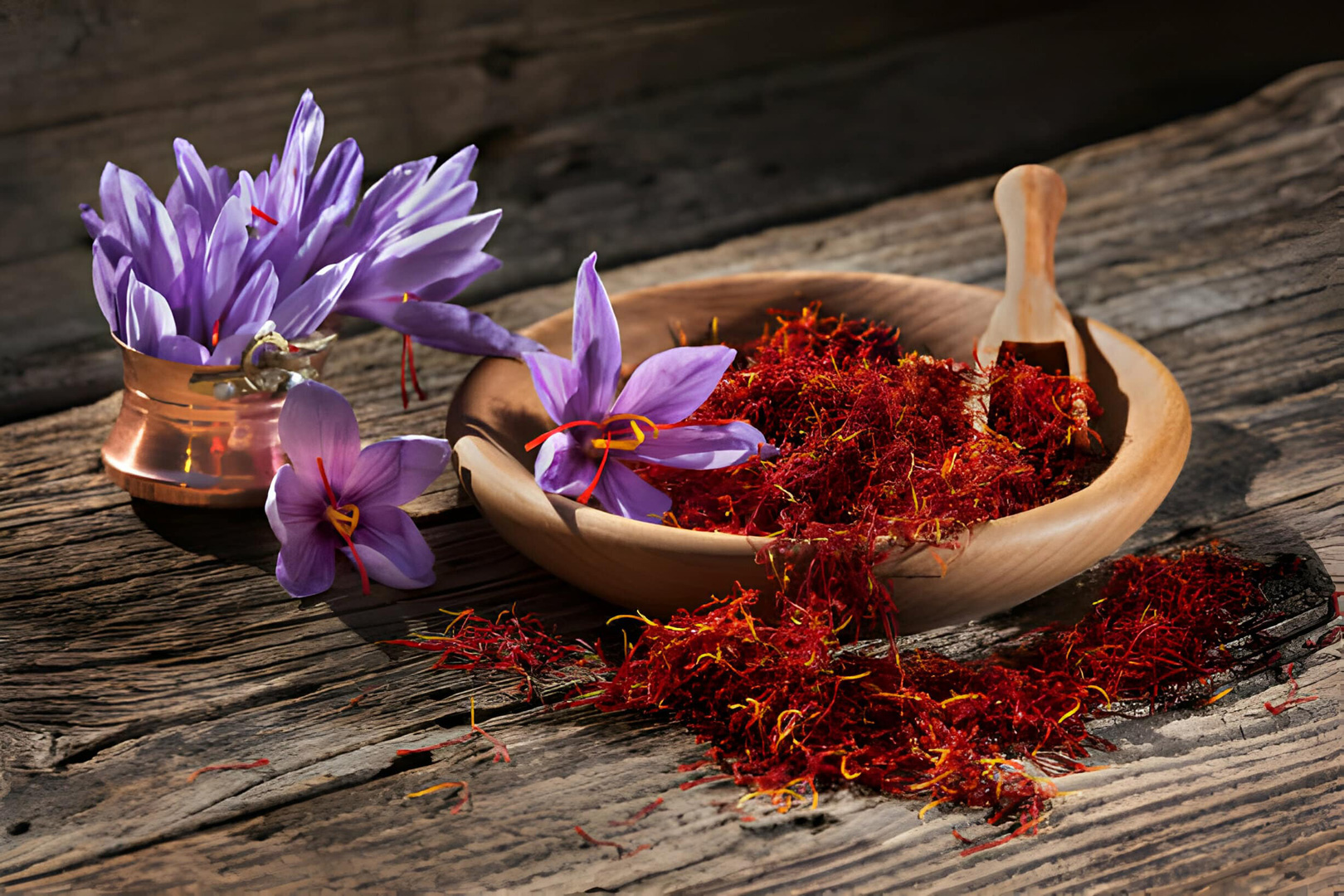
Saffron, also known in Persian as zarparān, is one of the most valuable spices in the world. Because of its vivid color, distinctive aroma, and high economic value, it has long been referred to as “red gold.” Saffron is obtained from the three red stigmas of the saffron flower, and its production is costly and time-consuming due to the entirely manual harvesting process. Iran, as the world’s largest producer of saffron, plays a central role in the cultivation, processing, and trade of this product. However, the importance of Iranian saffron extends beyond economic considerations, as it has held a prominent place in cultural, medicinal, ritual, and commercial contexts throughout history.
Properties and Uses
Saffron is a spice obtained from the dried stigmas of the saffron flower, a plant belonging to the Iridaceae family. Each flower produces only three stigmas; therefore, a large number of flowers must be harvested to produce a small amount of saffron. This characteristic has made saffron one of the most valuable spices in the world.
Saffron contains strong antioxidants and offers numerous health benefits, including improvement of mental health, reduction of depression, enhancement of memory, increased libido, support for cardiovascular health, improvement of vision, reduction of blood sugar levels, strengthening of the immune system, assistance in weight loss, and improvement of skin and digestive health. Due to these properties, saffron holds a special place in Iranian cuisine and is also used as a flavoring and coloring agent in pharmaceutical and cosmetic industries, as well as in traditional medicine. The main chemical compounds of saffron—crocin, picrocrocin, and safranal—are responsible for its color, taste, and aroma, respectively.
History of Saffron in Iran
Saffron has a history of more than three thousand years in Iran, and the Iranian Plateau is considered one of the earliest regions where this plant was cultivated and used. During the Achaemenid period, saffron was employed in dyeing, rituals, and ceremonies. In the Parthian era, particularly with the formation and expansion of the Silk Road during the reign of Mithridates II (Mithridates the Great), Iranian saffron reached East Asia and was introduced to the Chinese court. During this period and later in the Sasanian era, saffron was exported through extensive trade networks to regions in both the East and the West, gradually becoming a highly valued commodity in ancient global trade.
Today, Iran remains the largest producer of saffron in the world. Most of its production takes place in Khorasan Province, especially in areas such as Torbat-e Heydarieh, Qaenat, and Sarayan. The climatic conditions of the Khorasan region—including ample sunlight, light soil, and adequate water resources—provide an ideal environment for saffron cultivation. These factors have enabled Iran to account for a significant share of global saffron production, making saffron one of the country’s most important agricultural products.
Global Trade
In addition to its leading role in production, Iran is also one of the world’s major exporters of saffron. A substantial portion of Iranian saffron is exported to various countries, including China, European nations, and parts of the Middle East. Due to its high added value, saffron plays an important role in generating foreign currency revenues and creating employment, particularly in rural areas. Despite competition in the global market, Iranian saffron continues to hold a distinctive position because of its high quality.
Cultural Significance
In Iranian culture, saffron has long been a symbol of beauty, wealth, and splendor. It has a stable place in traditional Iranian cuisine, from rice dishes and stews to desserts, and has also been valued in traditional medicine for its therapeutic properties. Iranian poets and scholars have frequently referred to the unique characteristics of saffron. For example, Zakariya al-Razi mentioned its mood-enhancing effects, Abu Rayhan al-Biruni emphasized its calming influence, and Ibn Sina (Avicenna) described its warm temperament. In addition, Ferdowsi refers to saffron in the Shahnameh, indicating that this spice was used during the Mehrgan festival. In this regard, Ferdowsi states:
He ordered that fires be lit
And amber and saffron were all burned
Conclusion
Iranian saffron is a product whose significance goes far beyond that of a simple spice. Throughout history, it has played a fundamental role in Iran’s culture, economy, and trade, and it continues to be recognized today as one of Iran’s most distinctive symbols worldwide. The ongoing position of Iran as the largest saffron producer in the world reflects the deep connection between this product and the country’s geography, history, and cultural heritage.