
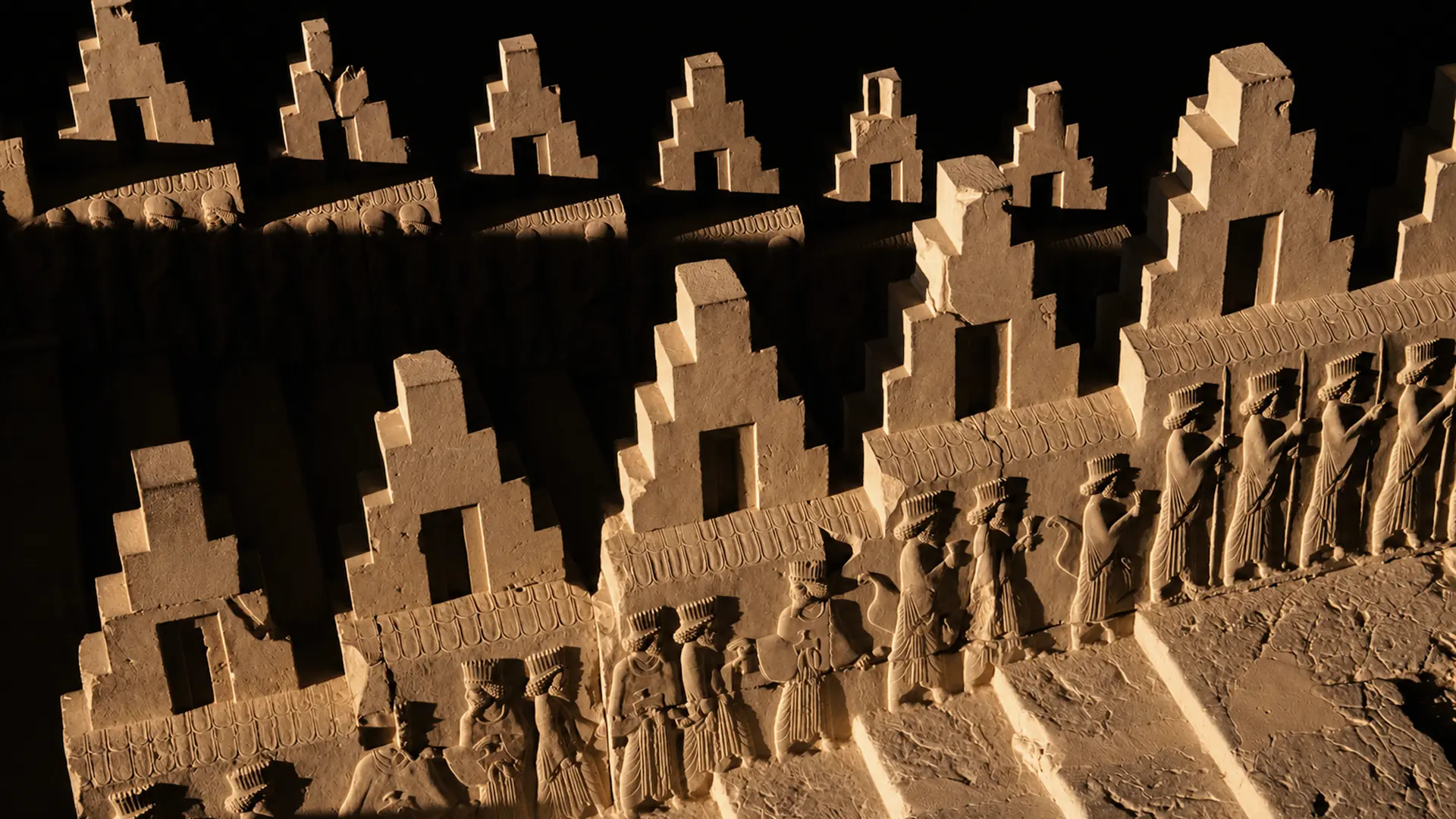
Ancient Iranian architecture includes many elements and architectural details that served both practical and decorative purposes. One of these features is the Kongoreh, which is also known as Shorfi.
A Kongoreh is a series of raised, tooth-like projections built along the upper edges of walls, palaces, and fortresses. In architectural terminology, this feature is known as a crenellation. Examples can be found in many ancient Iranian monuments, especially at the magnificent complex of Persepolis. In the past, Kongorehs formed an important part of the defensive system of castles and fortifications, serving as protective barriers for guards and defenders. Their design allowed soldiers to stand behind them while safely shooting arrows or throwing spears at attackers.
The word Kongoreh also appears frequently in Persian literature. Khayyam writes:
This palace once rivaled the heavens,
Before whose gates kings came in reverence.
Today, a lone dove sits upon its Kongoreh,
Asking, “Where are they?
The poem reflects on the passage of time and the impermanence of power. It describes a palace that was once so magnificent that it seemed to rival the sky, attracting kings who came to honor it. Today, however, only a single bird remains on its Kongorehs, calling out as if asking, “Where are they? Where have they gone?” The contrast reminds the reader that even the greatest kingdoms and rulers eventually fade, while nature quietly outlives them.