The Cyrus Cylinder is the most famous surviving artifact associated with Cyrus the Great, the founder of the Achaemenid Empire. Dating back more than 2,500 years, this clay cylinder records the official account of the Persian conquest of Babylon in 539 BC and outlines Cyrus’s policies after entering the city. Many historians regard it as the world’s first charter of human rights because it reflects principles such as respect for different beliefs and cultures, the abolition of slavery, the return of displaced peoples to their homelands, and the promotion of justice and social order.
Characteristics of Cyrus Cylinder
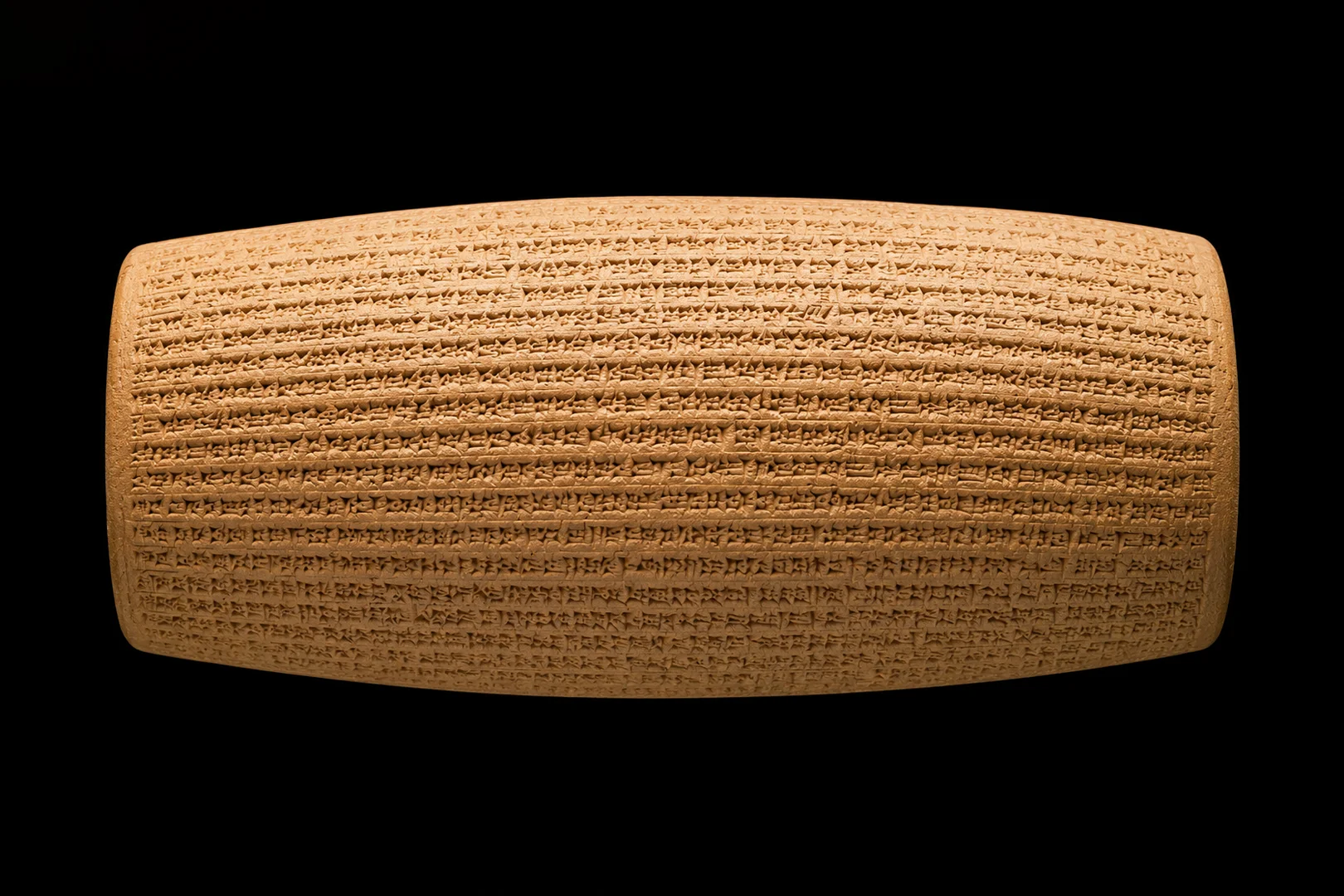
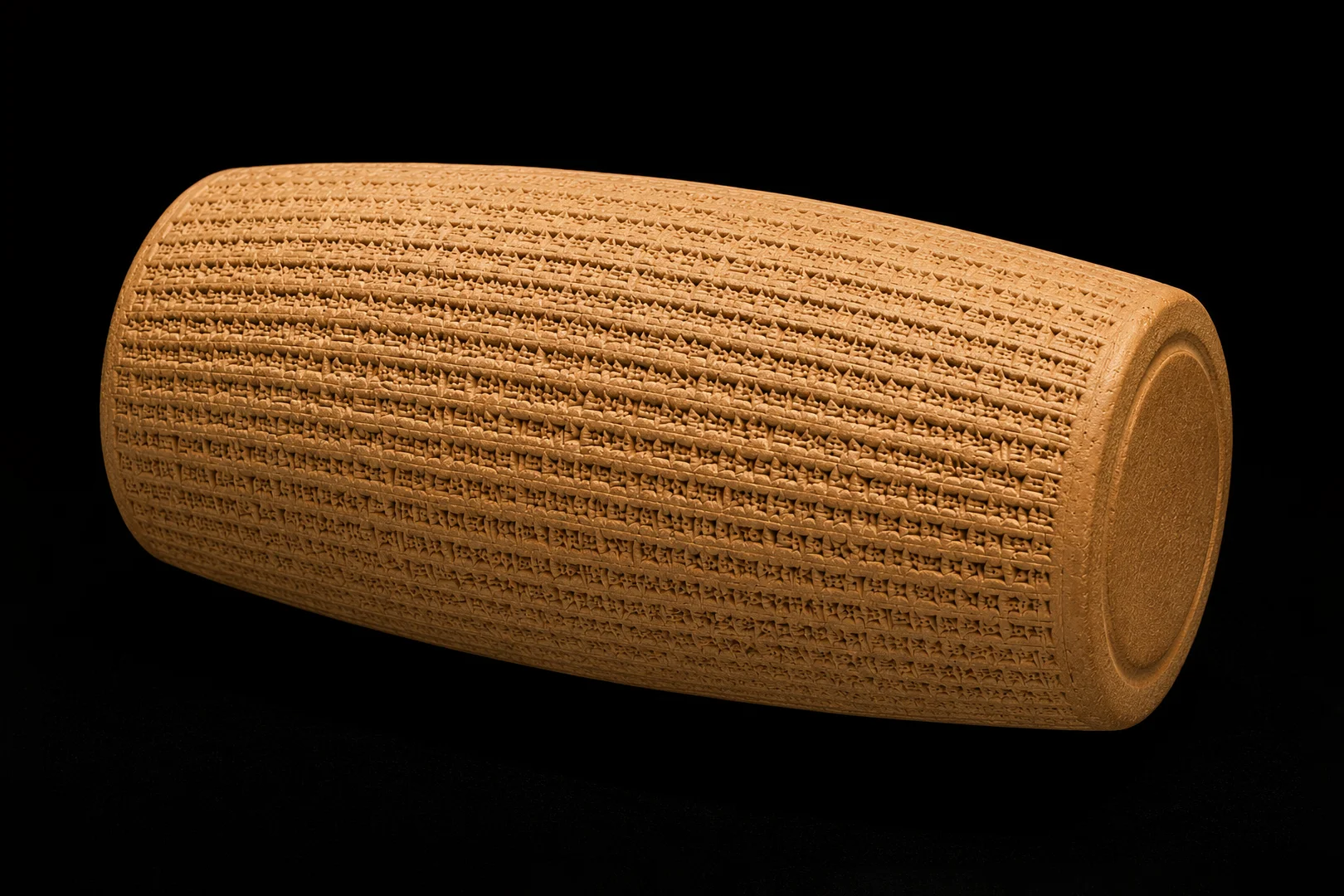
The Cyrus Cylinder is a baked clay cylinder commissioned by Cyrus the Great following his conquest of Babylon in 539 BC. Its inscription is written in the Akkadian language (Neo-Babylonian dialect) using Babylonian cuneiform script, as Akkadian served as the official language for government and administrative records in Mesopotamia during that period.
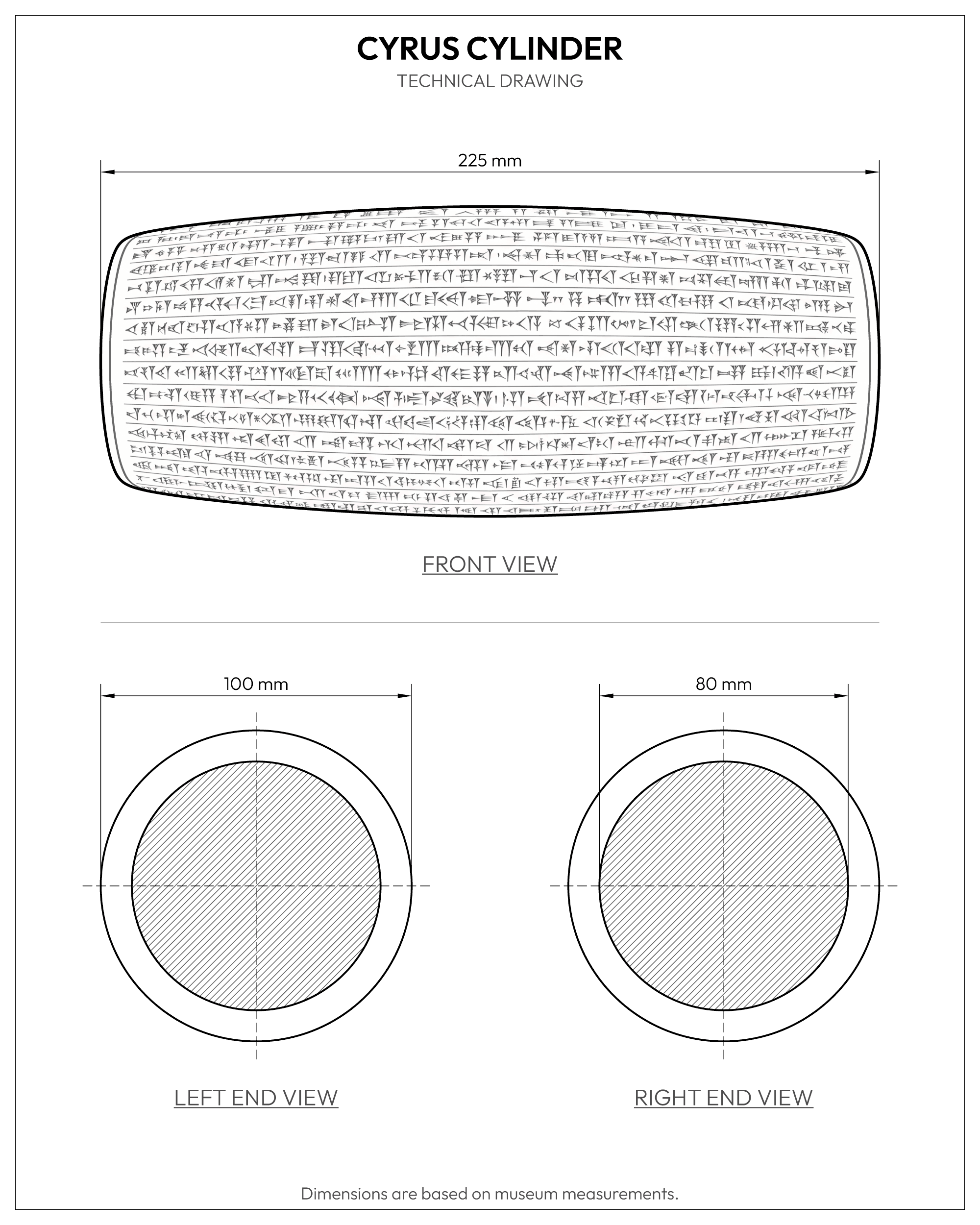
The cylinder measures approximately 22.5 centimeters (8.9 inches) in length and nearly 10 centimeters (3.9 inches) in diameter. Its inscription consists of about 45 lines carved across its curved surface.
Discovery of Cyrus Cylinder
The Cyrus Cylinder was discovered in 1879 during excavations at the ancient city of Babylon led by the Assyrian archaeologist Hormuzd Rassam. It was found beneath the foundations of the Esagila, the principal temple dedicated to Marduk. According to Mesopotamian tradition, kings often buried foundation inscriptions and commemorative objects beneath important buildings.
After its discovery, the cylinder was transferred to the British Museum, where it remains today. In 2010, it was loaned to Iran and displayed at the National Museum of Iran in Tehran, attracting large numbers of visitors and considerable public interest.
Translation of Cyrus Cylinder
Since its discovery, the Cyrus Cylinder has been translated and studied by numerous scholars. Among the earliest and most influential researchers were Henry Rawlinson and Theophilus G. Pinches. In Iran, distinguished scholars such as Professor Arfaei and Shahrokh Razmjou have also published important translations and academic studies that have contributed significantly to the understanding of the inscription.
The Message of Cyrus Cylinder
The Cyrus Cylinder records historical and political events surrounding the beginning of Cyrus the Great’s rule over Babylon. Its principal themes include:
- Cyrus’s introduction and royal lineage
- Public dissatisfaction with the rule of Nabonidus
- Marduk’s selection of Cyrus as king
- The peaceful entry of the Persian army into Babylon
- The prevention of looting and violence
- Respect for the people of Babylon
- The restoration of temples
- The return of divine statues to their original sanctuaries
- The return of groups of exiles to their homelands
- The establishment of security and order throughout the empire
The following passage is a literary adaptation inspired by the content of the Cyrus Cylinder. It presents its main ideas in clear and modern English rather than as a literal translation of the original inscription.
I am Cyrus, King of Kings, son of Cambyses, of the Achaemenids. When the people of Babylon suffered under the tyranny and foolishness of Nabonidus, seeing their traditions fade and their temples crumble, Marduk—the high god of Babylon—chose me to bring back peace and renewal to this land. My great army entered Babylon peacefully, without conflict or bloodshed. The people received me warmly, and I decreed that no one should suffer harm. I safeguarded their lives, properties, and freedom, shielding their homes and belongings from any harm. I brought an end to slavery and granted every person the freedom to practice their own faith and traditions. I rebuilt the ruined temples, restored the statues of the gods to their sacred sanctuaries, and revived their ancient traditions. I allowed all exiled peoples to return to their lands so they could rebuild their lives. Throughout the empire, I secured order and peace so that people of all languages, cultures, and beliefs could live side by side in peace. As long as the world stands, let justice overcome oppression, freedom prevail over servitude, and prosperity take the place of ruin.
Conclusion
The Cyrus Cylinder is undoubtedly one of the most important surviving documents from the ancient world. It provides valuable insight into the beginning of Cyrus the Great’s rule over Babylon and the Achaemenid approach to governing a diverse empire. The inscription emphasizes the restoration of order, respect for different cultures and religious traditions, the rebuilding of cities and temples, and the maintenance of stability across a vast realm.
More than 2,500 years after it was created, the Cyrus Cylinder remains one of the most enduring symbols of ancient Iranian history and civilization. It continues to be studied as an important historical source and stands as a lasting reminder of the ideas and statecraft of one of history’s most influential rulers.