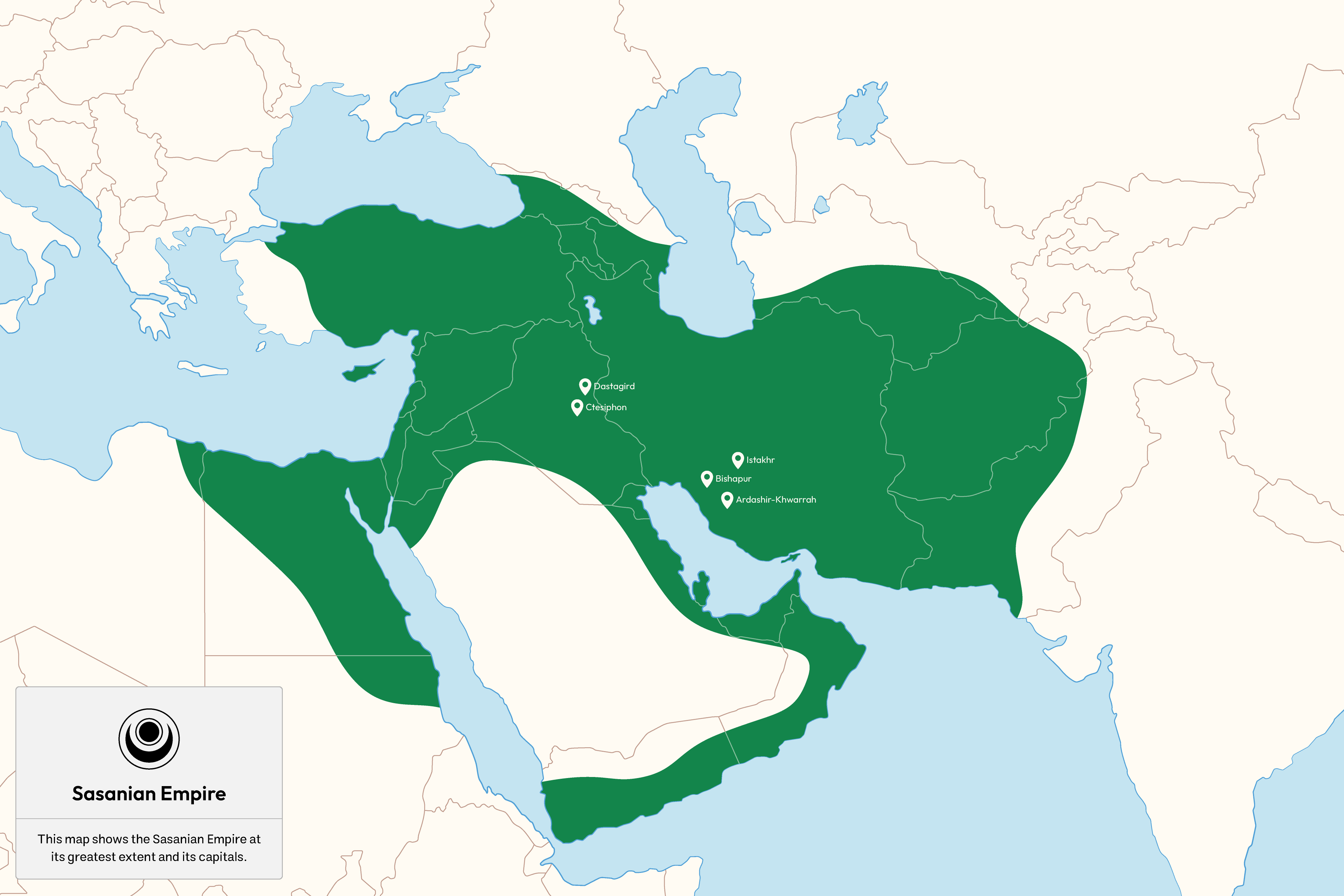
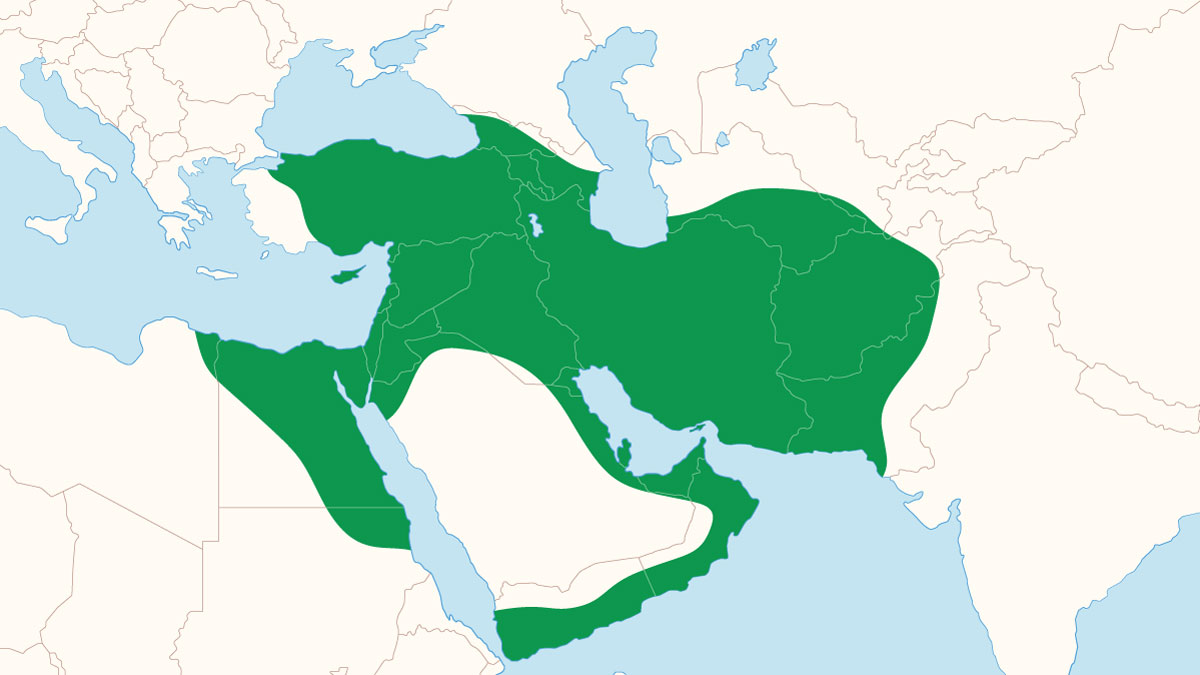
The Sassanid Empire (224–651 AD) was the last pre-Islamic Iranian dynasty and stood as one of the two superpowers of the ancient world alongside the Roman Empire. Viewing themselves as the inheritors of ancient glory, the Sassanids referred to their realm as Ērānšahr (the Land of the Aryans). This article examines the geographical extent and borders of this empire based on historical documentation and archaeological findings.
Sources for Defining Borders
A prominent feature of the Sassanid era is the availability of primary sources for determining border limits and understanding the empire’s political geography. Rock inscriptions, particularly the Inscription of Shapur I at the Ka’ba-ye Zartosht, provide precise information regarding the territories, provinces, and cities under Sassanid control.
In many instances, this data corrects the accounts of classical Roman historians, who sometimes resorted to exaggeration or silence regarding their military defeats against Iran. Conversely, Sassanid inscriptions offer a documented perspective by providing clear details and naming conquered regions directly—data that aligns with modern archaeological discoveries.
Preservation of Heritage
While it is not entirely clear whether the Sassanids possessed a complete historical understanding of the Achaemenids or conflated them with mythical and Avestan kings, it is evident that they viewed themselves as heirs to a global empire. In the letters of Ardashir I and Shapur II to Roman emperors, it is clearly observed that they claimed territories previously under Persian rule and strove to restore that original domain.
Stages of Expansion
Throughout Sassanid history, several kings played decisive roles in the expansion and consolidation of the empire’s borders:
- Shapur I: Stabilized the borders against Rome and captured Antioch.
- Shapur II: Reclaimed lost provinces and extended influence deep into Central Asia.
- Khosrow I (Anushirvan): Conquered Yemen and secured Iranian sovereignty over strategic southern waterways.
- Khosrow II (Parviz): Achieved the greatest territorial extent; during this period, the Sassanid army advanced near Constantinople and annexed Egypt, the Levant, and parts of Libya.
At its peak, these conquests allowed Ērānšahr to govern a vast territory stretching from Punjab and Tokharistan in the east to Egypt and Libya in the west, and from the Caucasus in the north to Abyssinia (via maritime influence and the presence in Yemen) in the south. However, it is historically significant to note that while the borders under Khosrow Parviz approached those of the Achaemenid era, this military expansion was unsustainable due to army exhaustion and prolonged warfare. Shortly before the fall of the dynasty, the borders reverted to their previous state.
Conclusion
The grandeur and vastness of the Sassanid realm were not merely the result of military might, but were rooted in a political will to preserve ancestral heritage. Although the empire’s borders fluctuated over the centuries, the geographical and cultural concept of “Ērānšahr” established during this period was so robust that it remained a lasting legacy in the historical memory and identity of Iranians even after the dynasty’s collapse.