
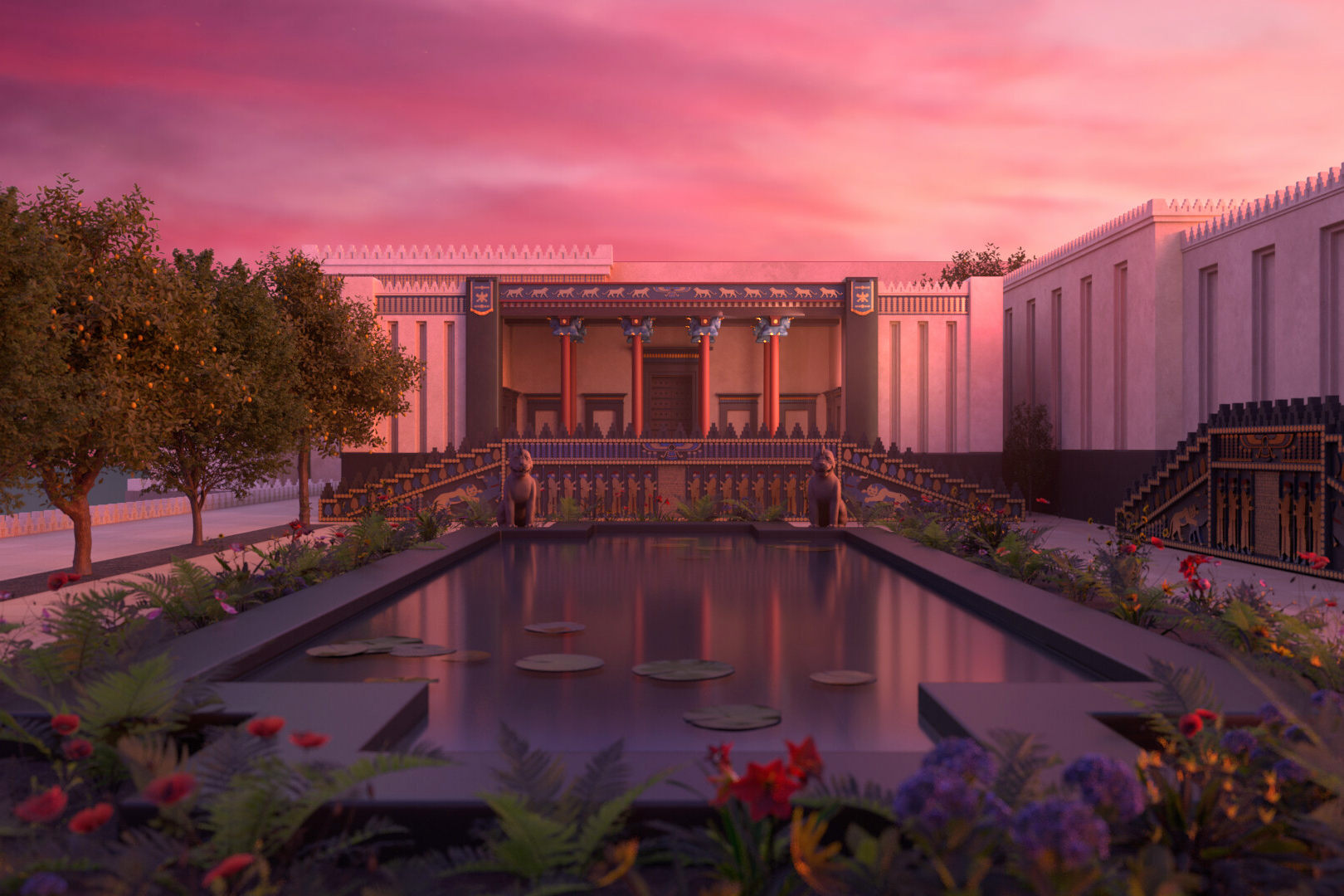
Iranian architecture is one of the oldest and most enduring architectural styles in the world. Over thousands of years, it has developed a distinctive identity characterized by harmony, geometric precision, balanced proportions, and a deep connection with nature. From prehistoric times to the rise of great imperial capitals, Iranian architecture has exerted a continuous influence on architectural styles across both the East and the West. Elements such as arches, domes, grand columns, the four-iwan plan, and central courtyards are among the most distinctive features of this architectural style.
Early Development
The roots of Iranian architecture can be traced to early settlements such as Shahr-e Sukhteh, Tepe Sialk, Elam, and Jiroft, where the earliest forms of planned spaces, mud-brick constructions, and ornamental motifs emerged. Massive structures like the Ziggurat of Chogha Zanbil reflect the architectural sophistication of ancient Iran, showcasing stepped forms, monumental stairways, and geometric arrangements. Together, these principles and innovations continued in Iranian architectural traditions for thousands of years.
Materials
Access to natural resources on the Iranian plateau had a significant impact on the formation of Iranian architecture. The abundance of clay made the early use of sun-dried mudbrick possible—a method that has been common since prehistoric times and is still seen in many regions. The combination of high-quality clay with durable lime mortars led to the expanded use of fired brick, a material that became essential for constructing arches and domes. Stone was used in areas where it was naturally available—especially along the Zagros mountain range—while wood, due to its scarcity across most of the plateau, had a more limited structural role. Plasters were used to smooth surfaces and create decorative reliefs, and the use of glazed bricks and tiles—seen from the Elamite and Achaemenid periods onward—added color, durability, and ornamentation to major architectural works.
Achaemenid Period
The Achaemenid period is one of the most prominent eras in the history of Iranian architecture. The Achaemenids emphasized grandeur, symmetry, and imperial symbolism. The ceremonial complex of Persepolis, the royal precincts of Pasargadae, and the rock-cut tombs at Naqsh-e Rostam are clear examples of their mastery in stone carving, columned halls, monumental staircases, and sophisticated spatial arrangements.
Despite incorporating a variety of regional styles, Achaemenid architecture retained a distinctly Iranian identity, and its influence extended from the Indus Valley to the Mediterranean rim.
Hellenistic Period
After Alexander’s invasion, Iranian architecture came under the influence of Hellenistic culture for a short time. During this period, certain Greek forms and decorative elements entered Iranian structures. However, it should be noted that many features that are today called “Greek architecture”—including the systematic use of columns, precise proportions, and motifs—actually have their roots in earlier Iranian and Egyptian styles. Despite this brief interruption, the tradition of Iranian architecture was quickly revived with the rise of the Parthians and once again regained its central position in the region.
Parthian Period
During the Parthian period, Iranian architecture was revived after the Hellenistic era, and the Parthians developed principles that became the cornerstones of later Iranian architecture.
Some of the most important achievements of Parthian architecture include:
- Widespread use of arches, barrel vaults, and domes
- Evolution of the iwan as a defining element of Iranian architecture
- Integration of central courtyards with large ceremonial spaces
- Emergence of the four-iwan plan
- Construction of large urban complexes such as the Arg-e Bam and Hatra
The innovations of the Parthians provided a solid foundation for all subsequent periods of Iranian architecture, and many elements that were later used in architectural styles in other parts of the world actually have their roots in Parthian architectural traditions.
Sasanian Period
Iranian architecture evolved during the Sasanian period, reaching a more cohesive and refined level, but contrary to popular belief, it did not differ fundamentally from Parthian architecture in terms of structure and spatial design. Important elements such as domes, arches, large halls, central courtyards, and the extensive use of brick and adobe are similar in both periods. Therefore, Sasanian architecture is considered to be a more complete and organized stage of the Parthian architectural style.
Examples such as Firuzabad, Bishapur, and Taq Kasra in Ctesiphon demonstrate the continuation of earlier architectural principles in a more monumental form.
Post-Islamic Period
A fundamental point that is often overlooked is that the architecture of religious buildings after the 7th century CE—especially mosques—is in fact a direct continuation of pre-Islamic Iranian architecture. Architectural elements found in mosques—such as the four-iwan plan, the domed chamber, the central courtyard, vaults, and geometric motifs—had already existed in the Zoroastrian fire temples of the Parthian–Sasanian era. Therefore, there is no such thing as “Islamic architecture”; rather, what exists is the natural continuation of Iranian architecture, which simply adopted a new religious function.
Historical and archaeological evidence shows that many fire temples were converted into mosques in the early Islamic period, and the techniques of arch and dome building continued directly from the Parthian–Sasanian era. Iranian architects across the Islamic realm were engaged in constructing buildings and expanding Iranian architectural traditions.
Global Influence
Iranian architecture has long influenced many regions of the world. In the East, the palaces of Central Asia, Timurid domes, Seljuk brickwork, and Ottoman iwans all have roots in Iranian styles. In the West, Iranian columned halls and decorative motifs influenced Greek and Mediterranean architecture, while Iranian domes and arches were later adopted in Byzantine and medieval European structures.
Conclusion
Iranian architecture is one of the most continuous and influential architectural styles in the world. From ancient civilizations to its peak flourishing during the Achaemenid, Parthian, and Sassanian periods and beyond, this tradition has embodied advanced engineering, precise aesthetics, and constant innovation. Its wide-ranging influence on both Eastern and Western architecture secures Iranian architecture’s place as an integral part of the history of world architecture.